
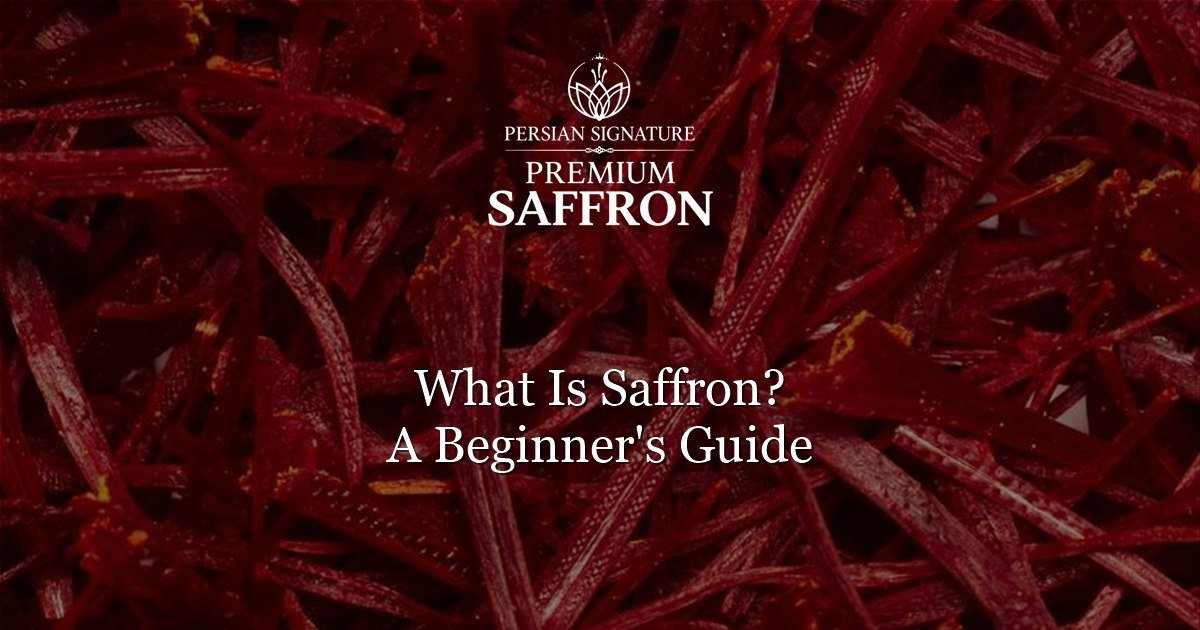
Short answer: Saffron is a spice made from the dried red threads (stigmas) of the saffron crocus flower, Crocus sativus. Each flower gives only three threads, and they are picked by hand. That is why saffron is sold by the gram. A small pinch gives rice, desserts and drinks a golden colour, a honey-like aroma and a gentle, slightly bitter taste.
If you have seen saffron at a kenduri, in a pot of nasi briyani or in a cup of saffron tea from the Middle East, you may have wondered what it really is and why it costs so much. This beginner’s guide explains where saffron comes from, how it is made, what it tastes like, how much to use and what to look for when you buy it in Malaysia.
Where saffron comes from
Saffron comes from a small purple flower called the saffron crocus. Inside each flower there is a style that splits into three deep red stigmas. These red threads, dried, are the spice. The yellow parts of the flower are not saffron.
The saffron crocus cannot grow from seed. According to Wikipedia’s article on saffron, it is a sterile plant, so farmers grow it from underground bulbs called corms, which are dug up, divided and replanted. The flowers appear only in autumn, and the blooming window lasts just one or two weeks.
Today Iran grows most of the world’s saffron, around 90% of global production. Other producers include Afghanistan, Greece, Spain, Kashmir in India and Morocco. The name itself has Persian roots: the Persian word is zafarān.
Why saffron is so expensive
The price of saffron comes from the work it takes, not from rarity alone.
- Tiny yield: roughly 150 flowers make just 1 gram of dried threads.
- Hand work: every flower is picked by hand, and the three red threads are separated by hand.
- Short season: the flowers must be picked within a few weeks in autumn, usually early in the morning.
- Careful drying: the threads must be dried soon after picking to keep their colour and aroma.
You can read the full story in our article on how Iranian saffron is harvested and made. The good news is that you need very little saffron for each dish, so one gram goes a long way.
What saffron tastes and smells like
Saffron has three things that cooks care about, and each one comes from a natural compound in the threads:
| What you notice | Main compound | What it does in food |
|---|---|---|
| Golden-yellow colour | Crocin | Colours rice, milk, sauces and desserts |
| Slightly bitter taste | Picrocrocin | Gives depth to sweet and savoury dishes |
| Honey-like, floral aroma | Safranal | Makes the dish smell rich and special |
Good saffron smells sweet and floral, a bit like honey and hay. Too much saffron can taste medicinal or bitter, so more is not always better.
How saffron is used in cooking
Saffron is used across Persian, Arab, Indian, Spanish and Malaysian kitchens. In Malaysia you will find it in:
- Nasi briyani, nasi mandi and nasi minyak for kenduri and weddings
- Kambing golek and other festive meat dishes
- Kesari, payasam, kheer and other Indian sweets
- Saffron milk, saffron tea and Arabic coffee
- Cakes, biscuits and ice cream
The usual method is simple. Crush a pinch of threads, then soak them in warm (not boiling) water or milk for 15–20 minutes. This is called blooming. Add the golden liquid to your dish near the end of cooking. Our step-by-step guide on how to make saffron water shows exactly how, and how to use saffron covers more ideas.
How much saffron to use
A little saffron goes far. One gram holds about 400–500 threads. As a guide:
| Number of people | Rice (approx.) | Saffron (approx.) |
|---|---|---|
| 4–5 people | About 500g | 15–20 threads |
| 10 people | About 1kg | 30–40 threads |
| 50 people | About 5kg | About 0.5g |
| 100 people | About 10kg | About 1g |
For more detail, see how many saffron threads are in 1 gram.
Threads, powder and grades
Saffron is sold as whole threads or as powder. Threads are easier to check by eye, because you can see the shape and colour. Powder is easy to mix but harder to judge, and it is the form most often mixed with other things such as turmeric or paprika.
Saffron is also sold in grades. The international standard ISO 3632 tests saffron in a laboratory for colour, taste and aroma strength. In shops you will also see trade names such as Negin, Sargol and Pushal, which describe how the threads are cut. Our guide to saffron grades explains each one in plain words.
Buying saffron in Malaysia
When you buy saffron, look for deep red threads, a sweet floral smell and clear information about the origin. Be careful with very cheap “saffron” that is bright orange or yellow. It may be safflower (kesumba), which looks similar but is a different plant. Our article on saffron vs turmeric vs safflower shows the difference, and fake or original saffron explains simple checks.
Keep saffron in an airtight jar, away from light, heat and moisture. You can see our current sizes and prices on the saffron price page or browse the shop.
Common mistakes
- Using too much: a big handful makes food bitter. Start with a small pinch.
- Using boiling water: very hot water can weaken the aroma. Use warm water or milk.
- Adding dry threads straight to rice: the colour spreads unevenly. Bloom the threads first.
- Confusing saffron with safflower or turmeric: they look similar in colour but taste and smell different.
- Storing it in a clear jar in the sun: light fades the colour. Keep it in a dark, dry place.
Frequently asked questions
Is saffron a flower or a spice?
Both, in a way. Saffron is a spice made from part of a flower: the dried red stigmas of the saffron crocus.
Where does most saffron come from?
Iran produces most of the world’s saffron, around 90%. Smaller amounts come from Afghanistan, Greece, Spain, Kashmir and Morocco.
What does saffron taste like?
It has a floral, honey-like aroma and a gentle, slightly bitter taste. Its main job in most dishes is colour and aroma.
How much saffron do I need for one meal?
About 15–20 threads are enough for rice or a dessert for 4–5 people. Bloom them in warm water or milk for 15–20 minutes first.
Is saffron the same as kunyit?
No. Kunyit (turmeric) is a root with an earthy taste. Saffron comes from a flower and has a floral aroma. They are different plants.