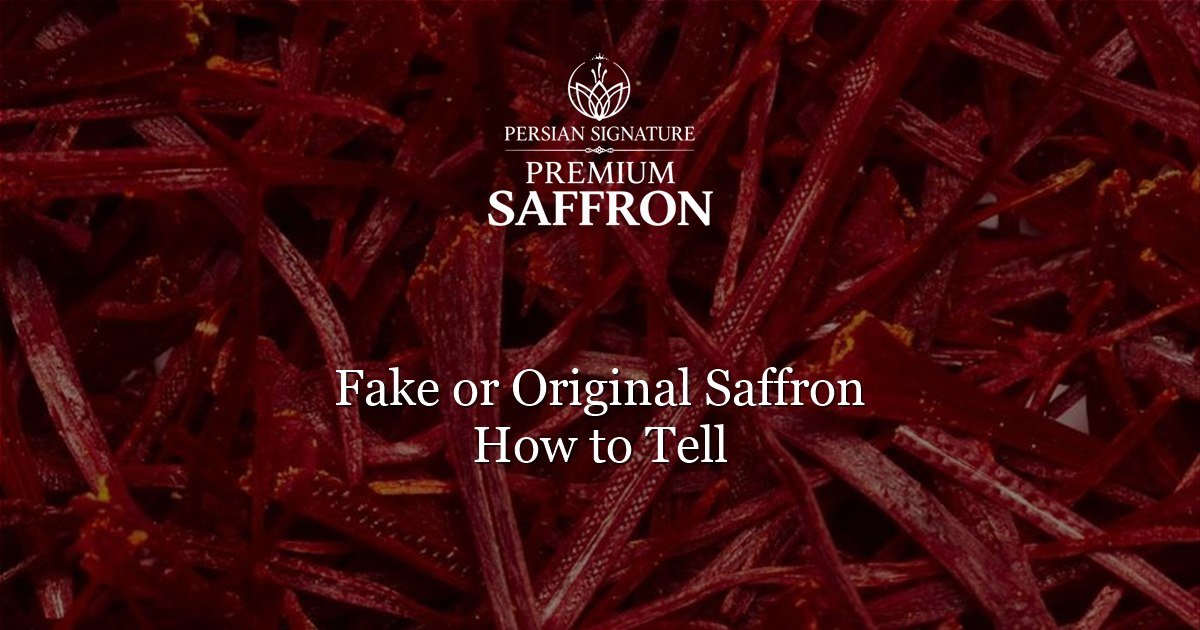
Short answer: Real saffron has deep red threads that widen into a small trumpet shape at one end. It has a strong floral smell, tastes slightly bitter rather than sweet, and releases its colour slowly in water. But no home test, not even the water test, can prove that saffron is 100% genuine. Only a laboratory test can do that. The most important step is to buy from a seller with full labelling, a registered company behind it and reviews from real customers.
Saffron is the most expensive spice in the world, which also makes it one of the most commonly faked. This guide explains what saffron is faked with, which checks you can do at home, what each check cannot prove, and how to buy with more confidence.
Why is saffron faked so often?
Each saffron flower has only three stigmas, and every one is picked by hand. It takes roughly 150–170 flowers to make one gram. Because saffron is so costly to produce, anyone who sells something cheaper as saffron can make a large profit. Sometimes it is not the spice that is swapped but the country of origin: Spanish police broke up a group that relabelled imported saffron as La Mancha saffron (OCCRP).
What is fake saffron made of?
In 2022, the Botanical Adulterants Prevention Program, an international programme that tracks fraud in plant products, reported these saffron fakes (NutraIngredients):
| Fake | How to recognise it |
|---|---|
| Safflower and calendula flowers | More orange, thin and feathery, like petals. No saffron aroma. |
| Corn silk dyed with beetroot juice | Even, flat threads with no trumpet-shaped end |
| Dyed paper strips, silk fibres, even plastic threads | Colour runs quickly in water; feels papery or plastic |
| Pomegranate peel or fibres and other red plant material | Irregular shapes, no saffron aroma |
| Saffron powder mixed with turmeric or paprika | Almost impossible to spot in powder; may smell earthy or spicy |
That is why our advice is simple: always buy threads, not powder.
A lower grade is not a fake
The yellow or orange part at the bottom of a thread (the style) is a natural part of the saffron flower. Lower grades contain some of it. That is not fraud. It only means less colour and aroma per gram. Super Negin contains only the red part. See saffron grades explained.
Want to see the difference for yourself? Try our 1g bottle of standard-grade Iranian saffron next to our Super Negin. Both are real saffron; only the grade is different.
Six home checks, and the limits of each
| Check | Real saffron | Limit |
|---|---|---|
| Look | Deep red, widening into a small trumpet shape at one end | Broken threads may not show the trumpet end, and good fakes can look similar |
| Smell | Strong, floral and honey-like | Old saffron smells weaker, but it isn’t fake |
| Taste | Slightly bitter, not sweet | A sweet taste can point to added sugar, but doesn’t prove it |
| Touch | Dry and brittle. After soaking, a thread stays whole when rubbed gently. | Sticky or oily threads are suspicious, because something may have been added to increase the weight |
| Cold water | Releases a golden-yellow colour slowly; the thread stays red | Only catches obvious artificial dyes. It can’t show the grade, origin or purity. |
| Price | Makes sense for the cost of producing it | A high price is not a guarantee either |
The water test: what it shows and what it doesn’t
The water test is the best-known check. Put a few threads in cold or room-temperature water. Real saffron slowly releases a golden-yellow colour, and the threads stay red. If the water turns red or bright yellow straight away, artificial colouring has probably been added (CulinaryLore). Don’t use hot water for this test, because it releases the colour faster and makes the result harder to judge.
What the water test cannot tell you:
- which country the saffron comes from,
- what grade it is,
- or how much of it has been mixed with something else.
Real saffron mixed with some safflower may still “pass”. The water test is a quick screen, not proof.
The only reliable way: a laboratory
The international standard ISO 3632 measures saffron’s colour strength, aroma and bitterness in the laboratory, together with moisture and foreign matter, and grades it into categories, with Category I the highest. Laboratories also use microscopy and genetic tests to find plant material that isn’t saffron (NutraIngredients). Persian Signature’s Super Negin saffron is ISO 3632 Category I.
Checklist for buying with confidence
- Buy threads, not powder.
- Full labelling: the country of origin, grade, net weight and brand.
- A real business behind it: a registered company name and a way to contact the seller.
- Read reviews and look at buyers’ photos, not only advertising photos.
- Work out the price per gram. A price far below the market for the same grade is a warning sign.
- Start with a small pack, then buy more once you are happy with it.
More detail is in our guide on where to buy authentic Iranian saffron in Malaysia.
If you think you have bought fake saffron
- Take photos of the pack and the threads, and keep the label.
- If you bought it on Shopee, request a return through Shopee.
- If you bought from Persian Signature and have a question, send us a message on WhatsApp.
Once you have good saffron
Learn how to use saffron to get the most colour from every thread, try our four easy saffron recipes, and read what research says about saffron. Then learn how to store saffron so it stays fresh.
Frequently asked questions
Is the water test reliable?
Only for catching obvious fakes with artificial colouring. It doesn’t show the grade, origin or purity.
Why do some of my saffron threads have yellow ends?
That part (the style) is a natural part of the saffron flower, and lower grades contain more of it. It isn’t fake; it just gives less colour and aroma.
Does real saffron taste sweet?
No. It tastes slightly bitter. Its aroma is sweet and honey-like, but its taste is not.
Should I buy saffron powder or threads?
Threads. Fakes are much harder to spot in powder.
Is your saffron tested?
Yes. Our Super Negin saffron is ISO 3632 Category I, and our saffron is halal certified, with ISO 22000 and HACCP certification.
Buy on ShopeeOrder on WhatsApp
Buying guide: saffron in Malaysia – prices, where to buy and how to choose.